
Diminished Ovarian Reserve (DOR) signifies a marked quantitative and qualitative drop in a woman’s remaining oocyte pool, heavily impeding natural conception. Managing DOR requires highly individualized medical protocols rather than standardized approaches. Prof. Dr. Ahmed Megahed utilizes advanced protocols to maximize success rates in DOR cases through optimized stimulation pathways.
Understanding Ovarian Reserve: It represents the current reproductive biological asset of a woman, which declines naturally with chronological age. Evaluation is strictly executed using: Serum Anti-Müllerian Hormone (AMH) testing, high-resolution transvaginal ultrasound for Antral Follicle Count (AFC), and baseline early follicular FSH/LH tracking. This evaluation helps determine current reproductive capacity and select the best treatment plan for the case.
Primary Causes of Diminished Ovarian Reserve:
- Chronological age advancement, specifically accelerated after age 35.
- Genetic predispositions and familial history of premature ovarian insufficiency (POI).
- Prior surgical traumas or excisions involving ovarian tissue (e.g., endometrioma removals).
- Severe underlying endocrine imbalances.
- Autoimmune conditions affecting reproductive tissue.
- Medical interventions such as chemotherapy.
However, in some cases, diminished ovarian reserve may occur without a clear cause.
Methods of Treating Diminished Ovarian Reserve:
- Improving Oocyte Quality: Utilizing tailored therapeutic priming regimens aimed at supporting ovarian health and improving oocyte cellular/mitochondrial energy before commencing cycles.
- Individualized Ovarian Stimulation Protocols: Selecting customized protocols for each case to stimulate the ovary to produce the largest possible number of good quality oocytes.
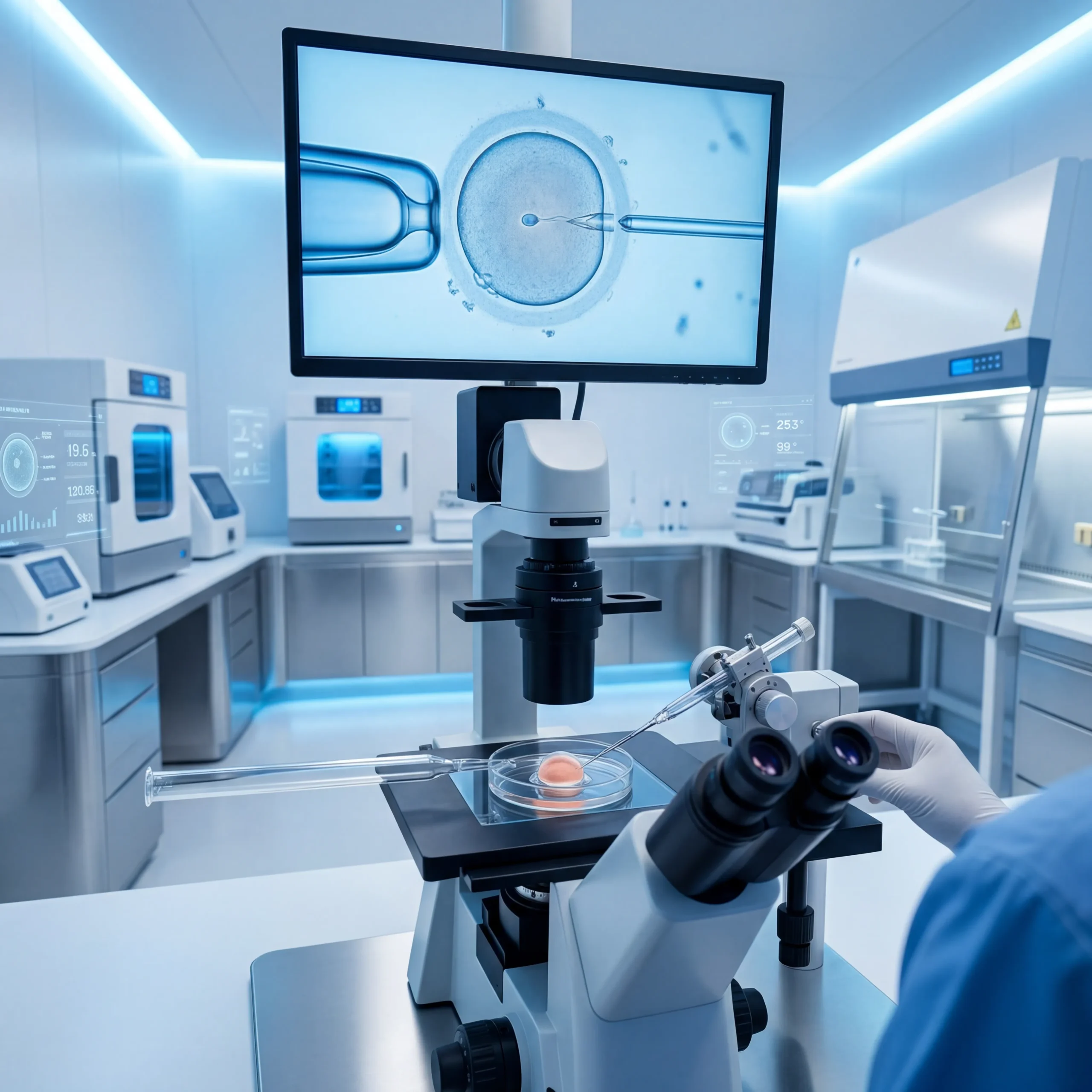
- Intracytoplasmic Sperm Injection (ICSI): Often the most effective option, allowing successful in-vitro fertilization and maximizing pregnancy potential.
- Embryo Freezing & Accumulation: Freezing high-grade embryos over consecutive gentle stimulation tracks (pooling) to increase selection choices for transfer.
Can pregnancy occur with diminished ovarian reserve?
Yes, pregnancy can occur in cases of low ovarian reserve, but that depends on several critical factors such as: Woman’s age, oocyte quality, general health condition, ovarian response to treatment, uterine health, and endometrial lining quality. Therefore, each case is evaluated individually before determining the treatment plan.
When is ICSI recommended in cases of diminished ovarian reserve?
It is highly recommended to resort to ICSI in the following scenarios: A severe drop in AMH levels, advanced maternal age, failure of previous natural or conservative pregnancy attempts, and a notable decrease in the number or quality of retrieved oocytes. ICSI helps maximize fertilization and clinical pregnancy rates.
Comprehensive Management of Ovarian Reserve Cases:
Dr. Ahmed Megahed possesses advanced experience in evaluating and treating complex cases of diminished ovarian reserve, relying on the latest scientific protocols and modern embryo evaluation techniques in cooperation with a specialized team of doctors and embryology laboratory specialists. This allows establishing accurate and customized treatment plans for each case based on age, hormonal tests, and ovarian response to stimulation. This integrated approach contributes to improving chances of obtaining better quality oocytes and embryos, and gives patients coming from inside Egypt and various Arab countries a treatment opportunity built on the latest scientific findings in the field of treating delayed conception.
- Choosing the most suitable stimulation protocol: The ovarian stimulation protocol is carefully determined according to the patient’s age, hormone tests, and ovarian reserve level, while avoiding excessive medication to ensure the best possible ovarian response and obtain oocytes of appropriate quality.
- Meticulous monitoring of oocyte growth during the stimulation phase: Ovarian follicle growth is periodically monitored using ultrasound and hormone tests, allowing dosage adjustments at the appropriate time to reach the best possible response before oocyte retrieval.
- Improving ICSI success chances: This accurate evaluation and scientific management of the stimulation protocol helps increase chances of obtaining mature oocytes and good embryos, which directly reflects on improving ICSI process success chances.